
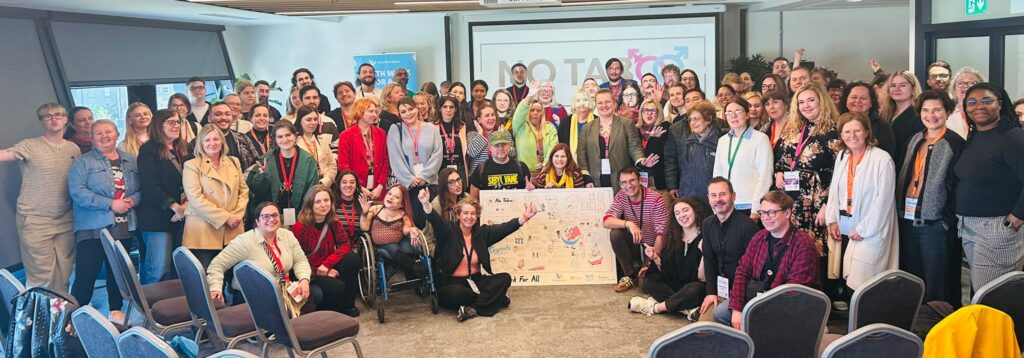
More than 100 delegates from 18 countries across Europe gathered in Dublin in May for No Taboo: Sexual Health & Consent – A Shared Learning Across Sectors, a pioneering European symposium exploring how organisations can better support young people in navigating issues of sexual health, relationships, consent, identity, power, and safety.
Hosted at Croke Park and organised in collaboration with Youth Work Ireland, SALTO Inclusion & Diversity, FRSE Poland, and Léargas, Ireland’s National Agency for Erasmus+ and the European Solidarity Corps, the three-day event created a unique platform for learning, collaboration, and dialogue across sectors.
The symposium brought together youth workers, educators, sports coaches, vocational education and training practitioners, European Solidarity Corps organisations, policymakers, and adult education professionals, recognising that conversations around sexual health and consent cannot be confined to any one setting. Instead, they are shaped by the many spaces where young people live, learn, socialise, and grow.
Creating a Space Where There Were No Taboos
The event was designed to create a safe and open environment where participants could explore sensitive and often challenging topics without judgement. Across workshops, keynote presentations, panel discussions, and informal networking opportunities, delegates shared experiences from their own countries and reflected on the different ways young people encounter issues of consent, relationships, sexuality, and personal boundaries.
Ireland’s reputation as a leader in rights-based and consent-focused youth work provided an important backdrop to the discussions. Participants examined how youth-centred approaches developed in Ireland could inform practice across Europe while also learning from innovative initiatives taking place in other countries.
Learning Through Participation
A key feature of the symposium was a series of interactive workshops that enabled every participant to engage with a diverse range of topics and approaches.
Delegates rotated through four workshops over the course of two days, exploring:
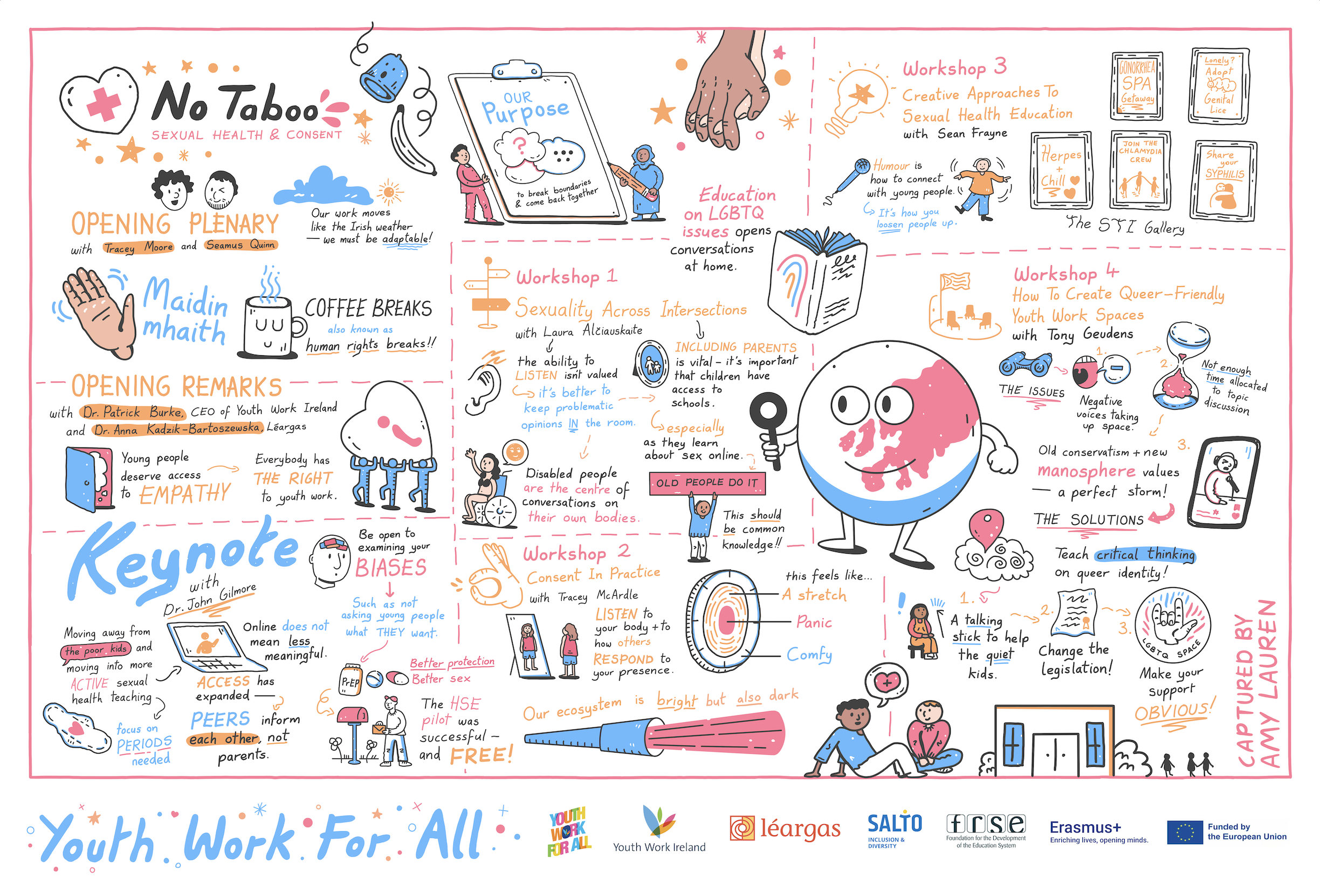
Sexuality at the Intersections: Stereotypes and Inclusion: Facilitated by Laura Alčiauskaitė, this session explored sexuality through an intersectional lens, highlighting the experiences of marginalised groups and those often excluded from mainstream conversations about sexuality and relationships.
Consent in Practice: Communication, Boundaries and Everyday Youth Work Realities: Led by Tracey McArdle, participants examined consent as an ongoing process involving communication, negotiation, safeguarding, and respect for personal boundaries in real-world settings.
Creative Approaches to Sexual Health Education: Facilitated by Sean Frayne, this workshop showcased innovative non-formal education methods and participatory approaches that make sexual health learning engaging, accessible, and relevant for young people.
Creating Queer-Friendly Spaces: Tony Geudens guided participants through practical strategies for developing more inclusive and affirming environments for LGBTIQA+ young people, encouraging organisations to critically examine barriers that can unintentionally exclude young people from participation.
Expert Voices and Honest Conversations
Alongside the workshops, delegates heard from a range of leading experts and practitioners working in the fields of youth work, education, health promotion, and gender-based violence prevention.
Highlights included a keynote address from Dr John Gilmore of University College Dublin and a panel discussion focused on creating safe conversations and educational practices around sexual health and consent.
Panel contributors included Sarah Benson, CEO of Women’s Aid; Annette Honan of the National Council for Curriculum and Assessment; Ruadhán Ó Críodáin of ShoutOut; Kevin O’Driscoll from the National Youth Council of Ireland; and Dr John Gilmore.
The discussions highlighted both the progress that has been made and the continuing challenges facing organisations seeking to support young people in an increasingly complex social and digital landscape.
Building European Connections
Beyond the formal programme, delegates took part in intercultural activities, networking opportunities, and an information marketplace where organisations shared resources, projects, and examples of good practice from across Europe. These exchanges enabled participants to build new partnerships, strengthen existing networks, and identify opportunities for future collaboration through Erasmus+ and the European Solidarity Corps.
Looking Forward
The No Taboo Symposium demonstrated the power of bringing together practitioners from different sectors and countries to tackle shared challenges. By creating opportunities for honest dialogue, mutual learning, and collective reflection, the event strengthened a growing European commitment to ensuring that young people have access to safe, inclusive, and empowering education and support around sexual health and consent.