
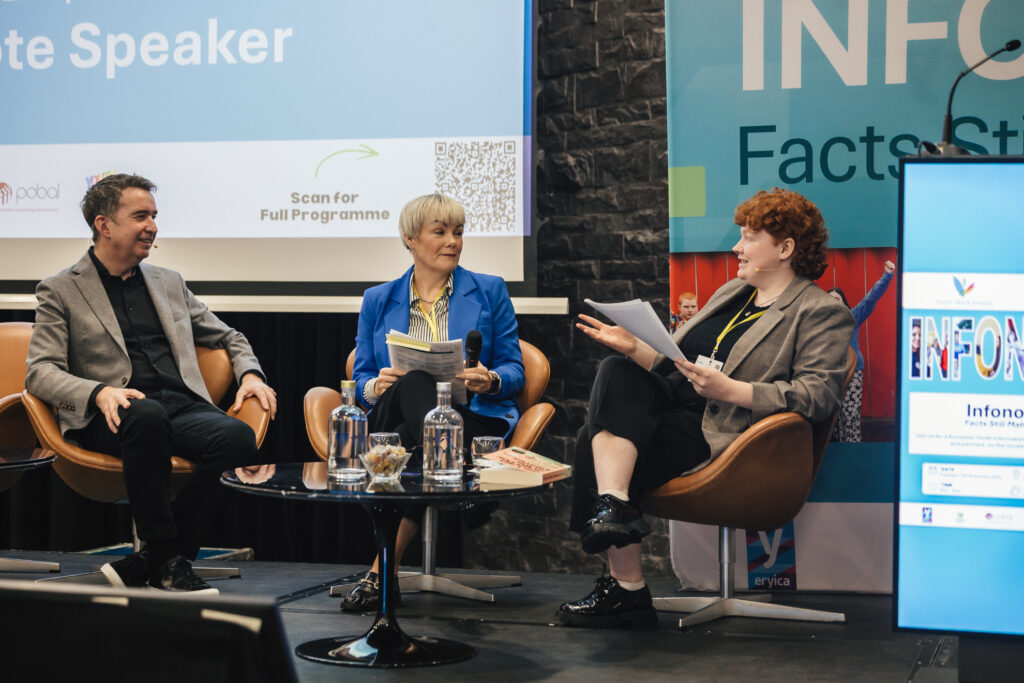
As artificial intelligence, social media and digital technologies continue to reshape how information is created and shared, the need for trusted, reliable information has never been greater. Against this backdrop, Youth Work Ireland hosted Infonomics 2.0: Facts Still Matter, an international conference that brought together policymakers, youth workers, researchers, media experts and digital innovators from across Europe to explore how we can support young people in navigating an increasingly complex information landscape.
Held at the Radisson Blu Royal Hotel in Dublin as part of Ireland’s Presidency of the Council of the European Union, the conference focused on the growing impact of AI, misinformation, disinformation and emerging technologies on young people’s lives, democratic participation and access to trustworthy information. Participants explored practical responses to these challenges and examined how youth information services can continue to evolve to meet the needs of young people.
The conference featured contributions from leading figures in youth policy, media literacy, European institutions and the technology sector, including Commissioner Michael McGrath, Mark Little, Stephanie Comey, Jorge Orlando Queirós and Dr Patrick Burke. Together, speakers highlighted the importance of critical thinking, media literacy and quality youth information in protecting democratic values and ensuring young people can make informed decisions about their lives.
A key outcome of Infonomics 2.0 was the development of the Dublin Declaration on Quality Youth Information. The Declaration reaffirms the right of all young people to access accurate, independent and trustworthy information and highlights the vital role of youth information services in supporting participation, inclusion and informed decision-making. At a time when misinformation can spread rapidly and AI-generated content is becoming increasingly common, the Declaration provides a strong European commitment to maintaining high standards of youth information practice and ensuring that young people have access to sources they can trust.
The discussions at Infonomics 2.0 made it clear that technology alone cannot solve the challenges facing young people today. Investment in youth work, youth information services and media literacy education remains essential. Young people need not only digital skills, but also the confidence, critical thinking abilities and support networks that enable them to assess information, challenge misinformation and actively participate in democratic life.
As Europe continues to grapple with the opportunities and challenges presented by AI and digital transformation, the Dublin Declaration provides a timely and important framework for action. Infonomics 2.0 demonstrated that facts still matter, and that quality youth information remains a cornerstone of an informed, inclusive and democratic society.